Border
Designv1.0.0Ornamental borders — the seven frieze groups over the motif library.
Ornamental bands and page frames built from the seven frieze groups.
What it is
A motif cell composed from the shared motif library, unfolded along a band by one of the seven frieze groups — hop, step, sidle, spinning hop, jump, spinning sidle, spinning jump — and either shown as a single band or placed on all four page edges as a frame, where the rotated side bands meet the horizontal ones in corner blocks.
Why it is in the catalogue
The architecture document predicted it: “the fundamental domain along one edge plus a corner motif, reflected and rotated to the other edges — which also gives you page frames and ornamental borders free.” The symmetry service has carried the seven frieze groups (and their tests) since mandala needed them; this crate is what they were for. A frame is also the most reusable page furniture in the catalogue — it wraps any other generator’s work.
History
The seven frieze groups are the complete classification of one-dimensional
repeating ornament, proved in the 19th century and named in the crystallographic
notation used here (p1, p11g, p1m1, p2, p11m, p2mg, p2mm).
Every border in every tradition — Greek key, Celtic knotwork band, Islamic
strapwork — is one of these seven.
The implementation’s guarantees
- Every one of the seven groups produces a page, tested individually: a group that silently drew nothing would be a hole in the whole point of the crate.
- The escalation lever is fewer, fatter motif rows. The first version shrank the band’s depth on retry and dropped repeats (which grows the cell), and that combination is exactly wrong: motifs got longer and thinner at once, turning into slivers, and the area floor rejected 56 regions on the third attempt rather than fewer. Depth is now held and the rows within it thin out instead.
- Each row draws a distinct motif family — picking randomly per row produced bands of three identical petals often enough to look like a bug.
- Rating basis: none — a design. Honesty fields: group, layout, repeats, cell and depth in points, attempt.
More designs
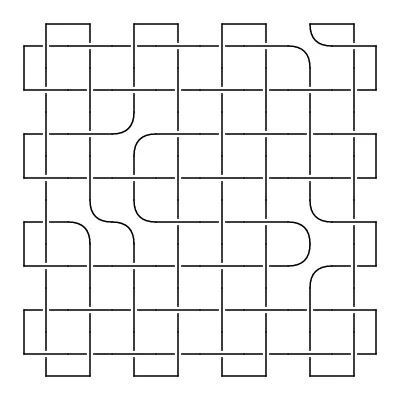
Celtic Plait
An interlaced plait: cords passing over and under, with cells that turn them back
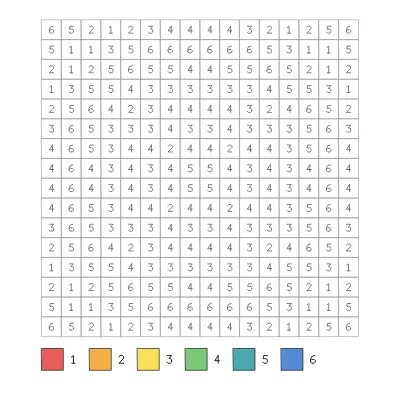
Colour by Number
Colour by number — a numbered grid that colours into a symmetric design
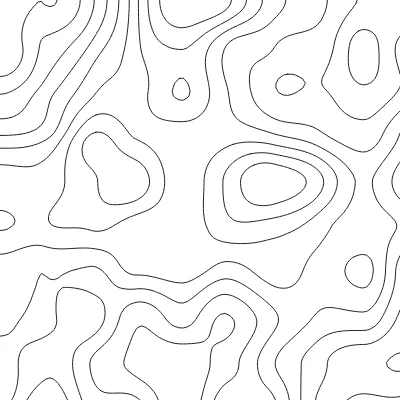
Contour
Contour lines — a seeded heightfield's level sets, terrain-map style
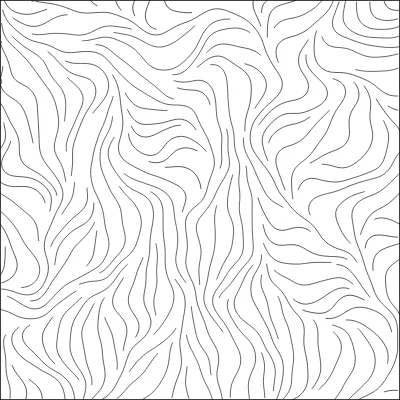
Flow Field
Evenly spaced streamlines through a noise field