Kakuro
Logic puzzlev1.0.0Cross-sums with combination reasoning and proven uniqueness.
Cross-sums: fill the white runs with digits 1–9 so each run adds to its clue, with no digit repeated within a run.
What it is
A crossword-shaped grid of black and white cells. Each horizontal and vertical run of white cells carries a clue — the sum its digits must reach — written in the black cell at its head. Digits 1–9 only, and no digit may repeat inside a single run.
How to play
Start from the runs whose sums have only one digit combination: three cells summing to 24 can only be {7, 8, 9}; two cells summing to 3 only {1, 2}. Cross runs share cells, so a placed digit narrows its crossing run. Work outward from those forced corners, using the combination tables and the no-repeat rule together. No guessing is ever required.
Purpose
The arithmetic sibling of the crossword — a staple of newspaper puzzle pages
and mixed puzzle books. In the workspace it earned its keep twice over: its
sum-run propagator (SumRun) is exactly what killer sudoku cages needed, so
one solver component serves two generators.
History
Published as Cross Sums in Dell puzzle magazines from 1966, usually credited to Jacob E. Funk, a Canadian employee of Dell. Nikoli imported it to Japan and coined kakuro, a contraction of kasan kurosu (“addition cross”). It is Japan’s second most popular pencil puzzle after sudoku.
This implementation
- Spec knobs:
rows,cols,block_density(how much of the interior is blocked before refinement),difficulty. - Generation: refinement rather than sampling — carve a blank pattern, fill it with legal digits, then refine (add blocks) until the clue set admits exactly one filling. Random carves almost never start unique, so the repair loop is the generator.
- Guarantees:
count_solutions(2) == 1, and the difficulty is the hardest rung of the shared technique ladder the solve actually needed, including the kakuro-specificSumBoundsandSumCombinationtechniques. - Note: the Kids/Easy bands floor their reasoning at
SumBounds— a kakuro cannot be solved without reading its run totals, so the band below that rung cannot exist and is reported honestly as Easy.
More logic puzzles
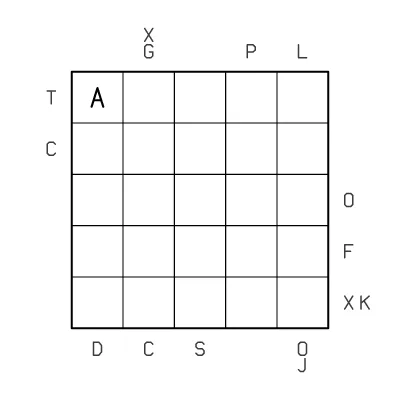
ABC Path
ABC Path — A to Y, each letter touching the next, guided by edge clues
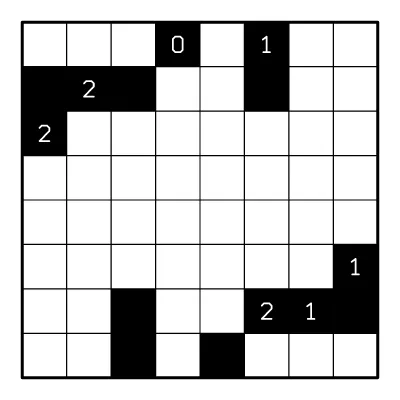
Akari (Light Up)
Place bulbs to light every cell, with no two bulbs shining on each other
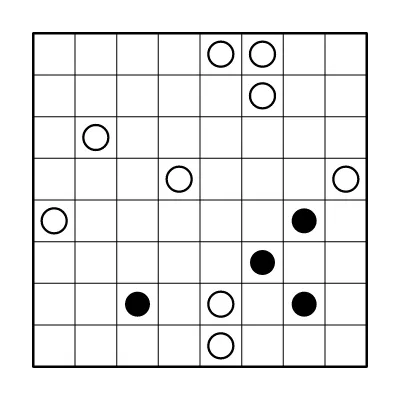
Binairo
Binairo — balance two symbols with no three alike and no twin lines
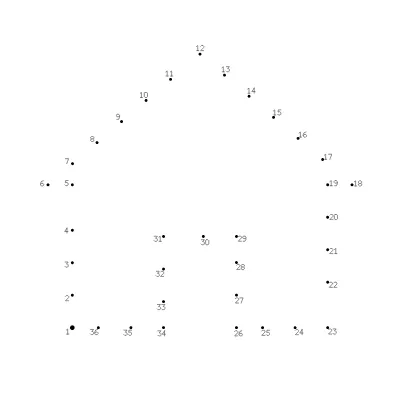
Dot-to-Dot
Connect the dots — parametric silhouettes with verified dot separation