Voronoi
Designv1.0.0Cellular and stained-glass patterns from relaxed Voronoi cells.
Cellular and stained-glass patterns from relaxed Voronoi cells.
What it is
Seed points are scattered with Poisson-disk spacing (no two too close); the plane is divided into cells, each containing everything nearer its seed than any other; Lloyd relaxation nudges the cells toward even, honeycomb-like shapes. The cell edges become line art — optionally with an inner offset per cell, which reads as leaded stained glass.
How to use
Colouring pages, with a rule of thumb: neighbouring cells in contrasting
colours (the four-colour theorem guarantees four suffice). The lead inset
style suits marker colouring — the border absorbs wobble. relax sweeps the
character from jagged shards (0) to soap-bubble evenness (3+).
Purpose
The design lane’s cellular texture — organic without being botanical. It is also the crate that exercises the geometry stack hardest: Delaunay triangulation, half-plane clipping, polygon offsetting, all deterministic per seed.
History
Georgy Voronoy formalised the diagrams in 1908, though Descartes sketched the idea (1644) and John Snow’s 1854 cholera map used one implicitly. Stuart Lloyd’s relaxation dates to 1957 (published 1982). Voronoi cells recur in nature — dragonfly wings, cracked mud, giraffe patches — which is why the pages read as organic.
This implementation
- Spec knobs:
size,spacing(Poisson-disk radius),relax(Lloyd passes),smooth,lead(stained-glass inset),stroke. - Generation: Poisson-disk sampling, Delaunay → Voronoi duality, half-plane cell clipping, optional per-cell inner offset.
- Guarantees: deterministic per seed; every cell is a closed region, so the colourability gate’s region checks apply directly; minimum region area enforced by the spacing floor.
More designs
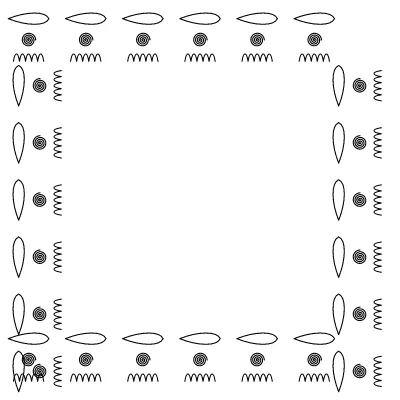
Border
Ornamental borders — the seven frieze groups over the motif library
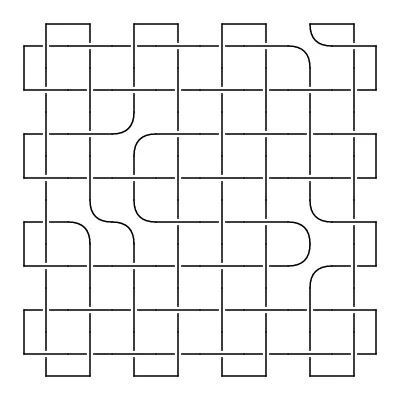
Celtic Plait
An interlaced plait: cords passing over and under, with cells that turn them back
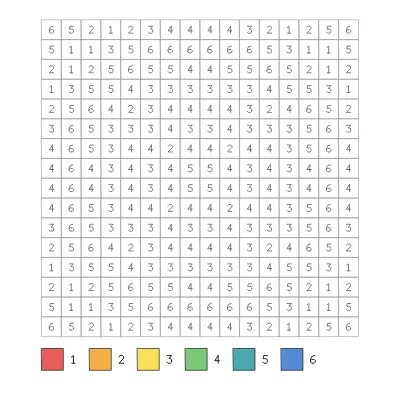
Colour by Number
Colour by number — a numbered grid that colours into a symmetric design
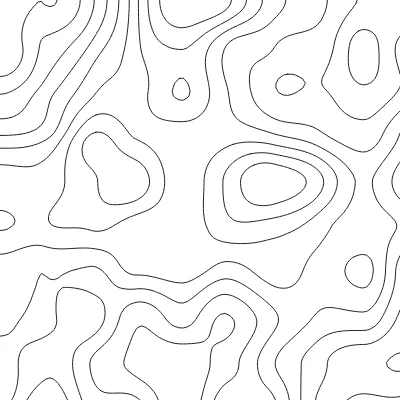
Contour
Contour lines — a seeded heightfield's level sets, terrain-map style