Zentangle
Designv1.0.0Zentangle — a partitioned page, each region filled with its own tangle.
A page cut into regions, each filled with a different line texture — a tangle.
What it is
Straight strokes divide the page; every region gets its own repeating pattern: hatching, scallops, pebbles, spirals, waves, bricks, or deliberate blank space. The appeal is the contrast between neighbouring textures, which is also the constraint — two dense tangles side by side read as one grey smear.
History
The Zentangle method was created by Rick Roberts and Maria Thomas in 2004 as a meditative drawing practice: small repeating patterns drawn without a plan, one region at a time. The generator makes the substrate — the partition and the texture choice — that a colourist or doodler then works over.
The implementation’s guarantees
- Regions cover the page exactly once, tested: the partition is convex half-plane clipping, and the areas must sum to the page or a tangle is leaking outside its region.
- No two regions in draw order share a tangle — the grey-smear failure, refused by construction and tested.
- Every tangle is drawn over its region’s bounding box and clipped by the scene’s group clip, which is what keeps the crate small: a texture never has to know the shape it fills.
- Stipple is excluded from the default palette, and that is a measurement,
not taste: its dots come out at ~14 mm² against the adult colourability
floor of 40 mm², and coarsening the pitch spreads them without growing
them — a stipple dot is ink rather than a region to fill. It remains
available by naming it in the spec, and such a page reports
colorable: falsehonestly. A test pins this, so if it ever becomes colourable the doc gets corrected rather than quietly drifting. - The escalation lever is a coarser pitch. Rating basis: none — a design.
More designs
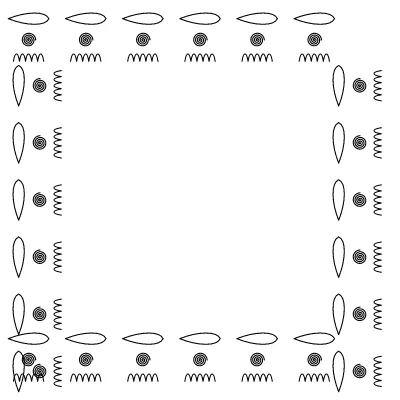
Border
Ornamental borders — the seven frieze groups over the motif library
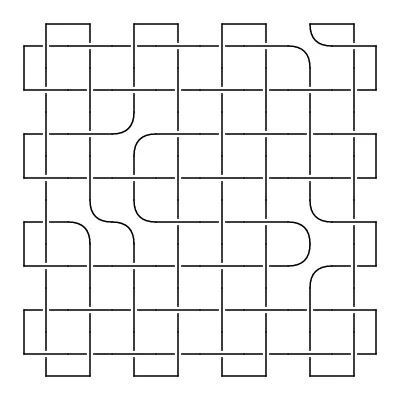
Celtic Plait
An interlaced plait: cords passing over and under, with cells that turn them back
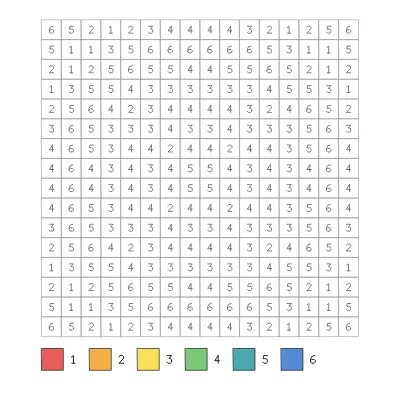
Colour by Number
Colour by number — a numbered grid that colours into a symmetric design
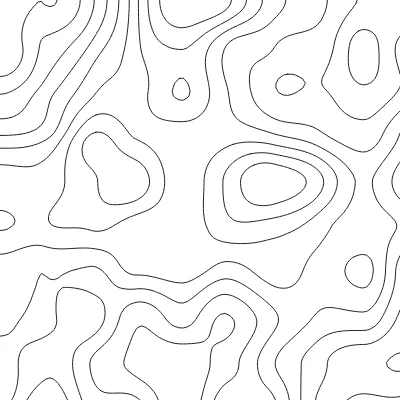
Contour
Contour lines — a seeded heightfield's level sets, terrain-map style